
 Coder Delta
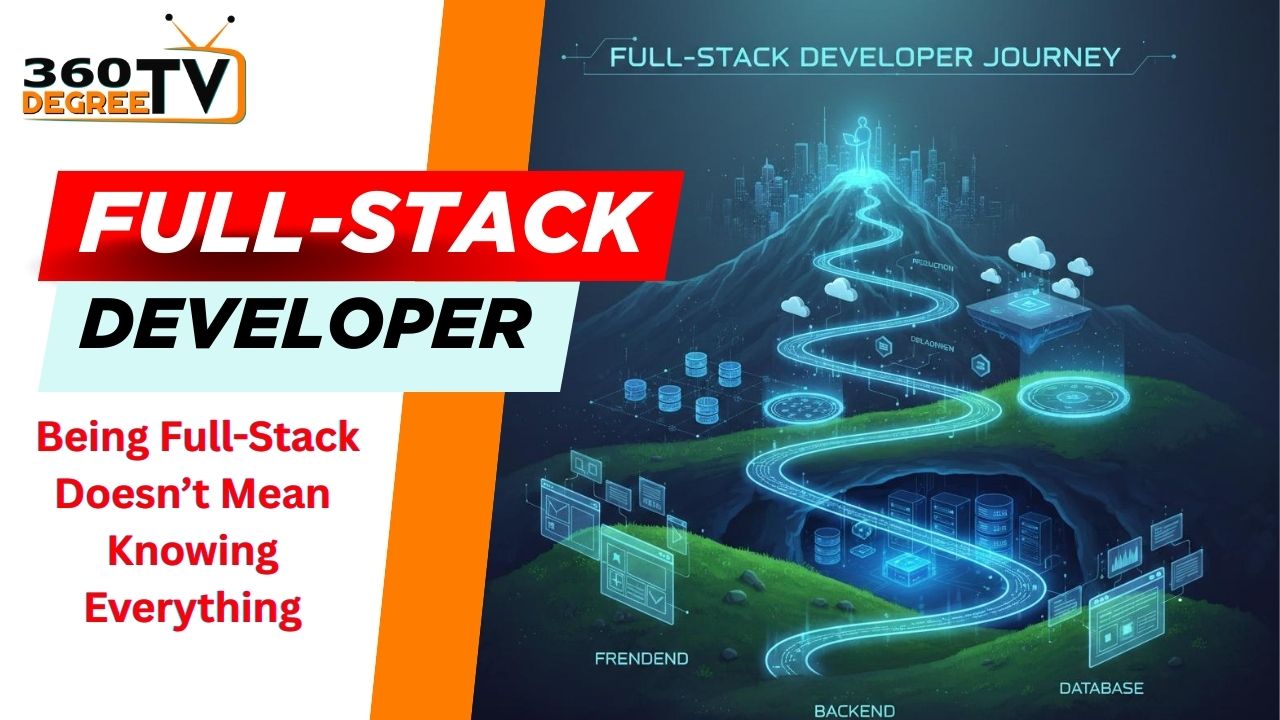
What Does Being a Full-Stack Developer Really Mean?
In today’s tech world, the term “Full-Stack Developer” is very popular. Many people think that being full-stack means knowing everything—every language, every framework, every tool.
But in reality, being full-stack is not about knowing everything. It is about understanding how different parts of an application work together and being able to navigate across layers confidently.
Let’s break this concept step by step.
1. Being Full-Stack Doesn’t Mean Knowing Everything
A common myth is that full-stack developers must be experts in every technology—front-end, back-end, databases, servers, cloud, and more.
This is not true.
Real Meaning:
Being full-stack means having the ability to move across different layers of an application and understand how they connect.
For example -
• You may not be a design expert, but you understand UI/UX basics
• You may not be a DevOps specialist, but you know how deployment works
• You may not master every framework, but you can choose the right tool
Full-stack is about awareness, not perfection.
2. Solving Problems End-to-End
One of the biggest strengths of a full-stack developer is the ability to solve problems from start to finish.
What does “end-to-end” mean?
It means -
• Understanding the user requirement
• Designing the interface
• Writing the logic
• Managing the database
• Handling the server
• Testing and deploying the application
• Instead of focusing on just one part, a full-stack developer sees the entire journey of a feature.
• This makes them very valuable in:
• Startups
• Small teams
• Product-based companies
3. Understanding How Every Piece Fits Together
A full-stack developer understands how different components work together, such as -
• Front-End → What users see and interact with
• Logic → Business rules and validations
• Server → Request handling and APIs
• Database → Data storage and retrieval
• Architecture → Overall system structure
• Testing → Ensuring quality
• Cloud → Hosting and scalability
Even if you don’t master each part, knowing how they connect helps you -
• Debug faster
• Design better systems
• Communicate effectively with teams
4. Pro Tip - Start with One Strong Area
Trying to learn everything at once often leads to confusion and burnout.
The Smart Approach-
• Start with one strong area
• Build a solid foundation
• Expand slowly to other layers
For example -
• Start with Back-End (Laravel, Node.js)
• Or start with Front-End (HTML, CSS, JavaScript, React)
Once you are confident in one area, learning the rest becomes much easier.
5. Full-Stack Development Is Built in Layers
Full-stack development cannot be learned in one day or in one step.
It is a slow and gradual process.
Think of Full-Stack Learning Like Building a House
When you build a house, you don’t complete everything at once.
Step 1 - Foundation
First, you build a strong foundation.
In full-stack development, this means:
• Basic programming concepts
• HTML, CSS, JavaScript basics
• Understanding how the web works
Without a strong foundation, everything else becomes unstable.
Step 2: Floors
After the foundation, you build the floors.
In full-stack development, this includes -
• Front-end frameworks (React, Vue, etc.)
• Back-end development (Laravel, Node.js, APIs)
• Databases (MySQL, MongoDB)
This is where your skills start growing practically.
Step 3: Finishing
Finally, you do the finishing work.
In full-stack development, this means -
• Application architecture
• Security
• Testing
• Performance optimization
• Deployment and cloud knowledge
This makes your application professional and production-ready.
Why This Layered Approach Is Important
Each layer -
• Builds on the previous one
• Makes concepts clearer
• Increases confidence
• Reduces confusion
When you learn step by step, you understand better, remember more, and grow naturally as a developer.
6. It’s Not About the Stack, It’s About the Value You Bring
Many developers think their importance depends on the technology stack they use, such as:
• React
• Laravel
• Node.js
• Python
• MongoDB
But in real life, companies don’t hire you only for tools.
What Does “Stack” Mean?
A stack is just a set of technologies you use to build an application.
Example -
• Front-end: HTML, CSS, React
• Back-end: Laravel, Node.js
• Database: MySQL, MongoDB
Tools can change with time.
What Does “Value” Mean?
Value means what you can actually do with those tools.
It includes -
• Solving real problems
• Writing clean and maintainable code
• Delivering features on time
• Improving existing systems
• Learning and adapting quickly
Why Value Is More Important Than Stack
Technologies keep changing, but skills remain useful forever.
A valuable developer -
• Understands the problem before writing code
• Chooses the right solution, not just a popular tool
• Fixes bugs efficiently
• Works well with a team
• Improves the product continuously
Even if the stack changes, such a developer can learn new tools easily.
Simple Example
Two developers know the same stack -
• Developer A only knows syntax
• Developer B understands logic, performance, and user needs
Developer B brings more value, even with the same stack.
What Companies Really Look For
Companies want developers who can:
• Create useful features
• Solve complex problems
• Deliver working solutions
• Improve code and systems over time
Not just someone who lists many technologies on a resume.
7. What Really Matters for Full-Stack Developers Today?
In today’s fast-changing tech world, many developers feel confused.
There are too many tools, frameworks, and technologies.
This creates an important question:
Is it better to know many tools or master a few deeply?
The Best Approach for Full-Stack Developers is
• Master a few core tools deeply
• Understand other tools conceptually
What Does “Master a Few Tools Deeply” Mean?
It means -
• Understanding how a tool works internally
• Knowing why something works, not just how
• Being able to debug problems confidently
• Writing clean and efficient code
For example -
• Deep knowledge of JavaScript
• Strong understanding of one back-end framework
• Solid database concepts
This strong base makes learning new tools much easier.
What Does “Understand Others Conceptually” Mean?
You don’t need to master every tool.
But you should -
• Know what a tool is used for
• Know when to use it
• Understand how it fits into the system
This helps you make better technical decisions without confusion.
Why Deep Knowledge Is More Valuable
Deep knowledge gives you -
• Confidence – You know what you’re doing
• Better decisions – You choose the right solution
• Long-term growth – Your skills stay useful even when tools change
A developer with deep understanding can adapt easily to new technologies.
The Problem with Knowing Too Many Tools Shallowly
Learning many tools at a surface level often leads to -
• Weak fundamentals – Basics are not clear
• Poor debugging skills – Hard to fix real problems
• Lack of confidence – Fear when something breaks
Such knowledge looks good on paper but fails in real projects.
Final Thoughts
Being a full-stack developer is not a race. It is a long-term journey.
Full-stack development is about -
• Understanding systems
• Connecting different parts together
• Solving real-world problems
• Growing step by step, layer by layer
If you focus on -
• Strong fundamentals
• Clear concepts
• Real value creation
Becoming a successful full-stack developer will happen naturally over time, not overnight.
Conclusion
Being a full-stack developer is not about learning every tool or framework.
It is about understanding how different parts of an application work together and using that knowledge to solve real problems.
Full-stack development is a step-by-step journey. You build strong fundamentals first, then grow your skills layer by layer. With time, this approach brings clarity, confidence, and consistency.
Instead of chasing every new technology, focus on -
• Mastering a few core skills deeply
• Understanding systems as a whole
• Creating real value through your work
When you prioritize strong basics, clear thinking, and continuous learning, becoming a successful full-stack developer becomes a natural result, not a stressful race.


Blog Comments (0)